

Quick Answer
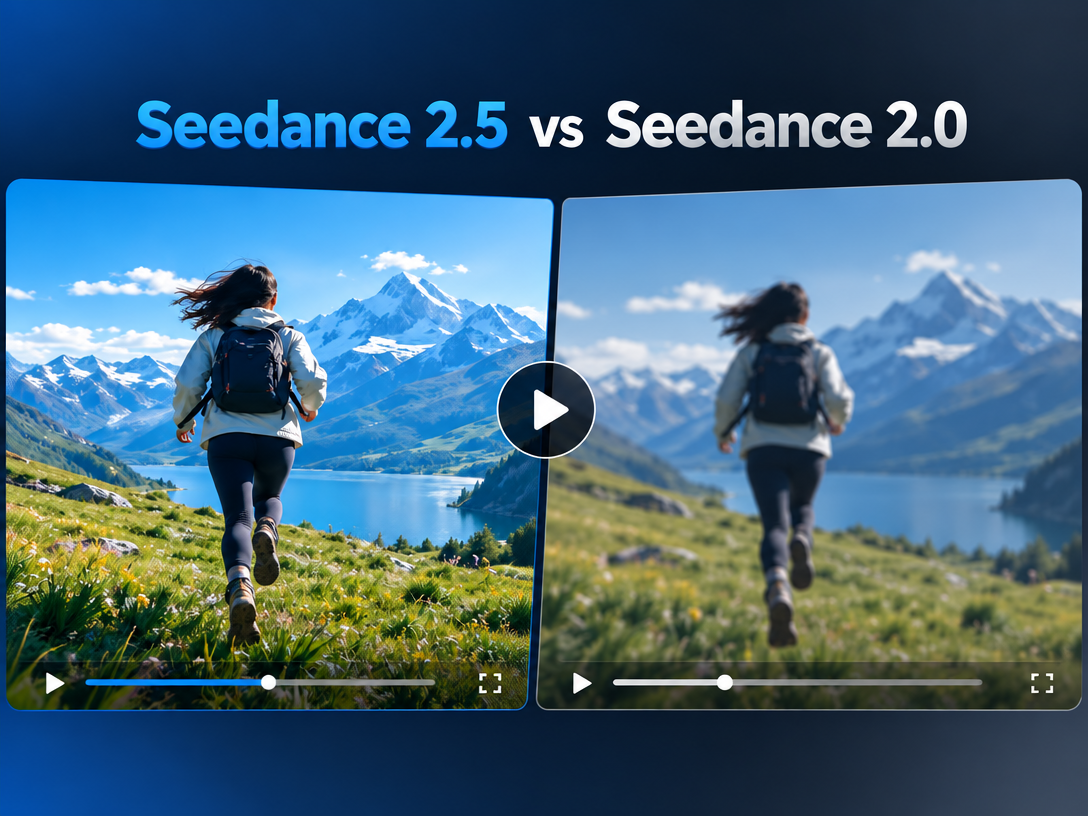
The question isn't which is "better" — it's whether Seedance 2.5 is 12x better.
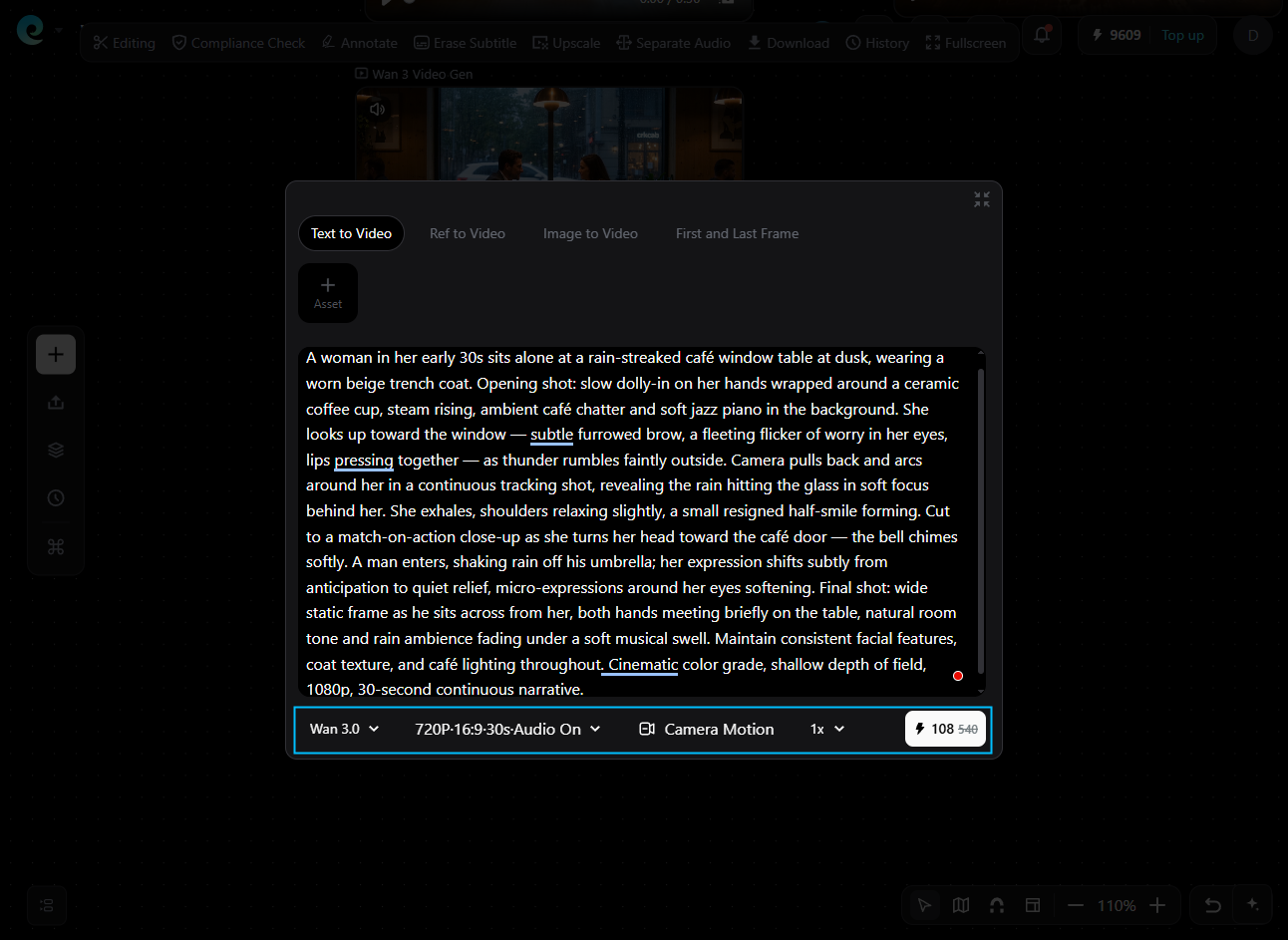
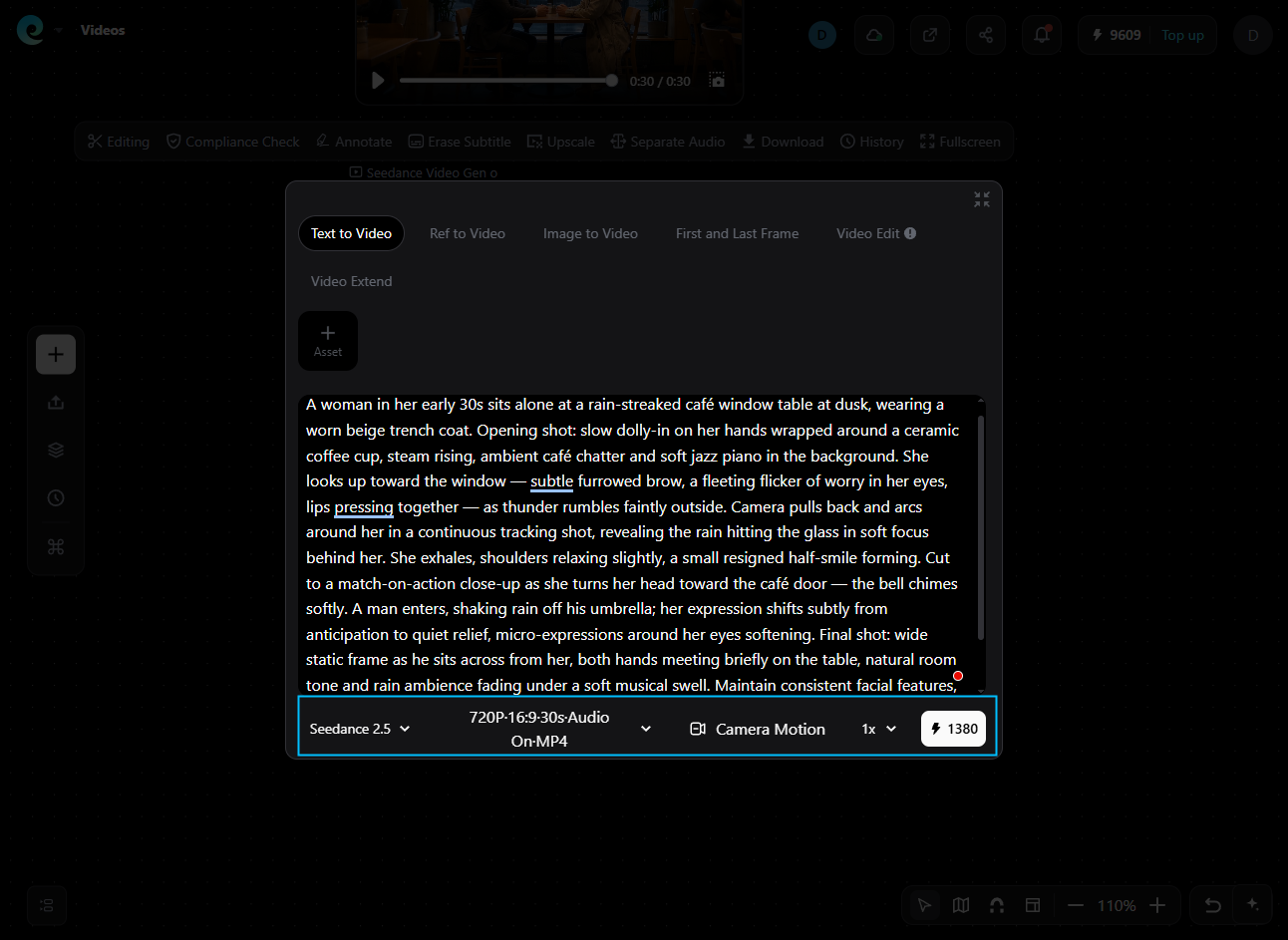
We ran identical 30-second, 720p prompts with audio through both models on Pixmax. Wan 3.0 consumed 108 credits (20% off promo). Seedance 2.5 consumed 1380 credits. Same length, same resolution, same audio — one costs twelve times more. The quality gap is real, but it's not 12x real.
What is Wan 3.0?
Wan 3.0 is Alibaba's fourth-generation video model, public beta since August 6, 2026. It follows Wan 2.1 and 2.2 (both Apache 2.0 open-source) and Wan 2.7 (closed API). The headline: 30-second single-pass generation, double Wan 2.7's 15-second ceiling.
But the real differentiator is input. Wan 3.0 accepts documents — PDFs, PPTs, spreadsheets, Word files, even web URLs — as creative source material. No other video model does this. Feed it a quarterly report and a prompt, and it generates video from that content.
Key specs: 2–30s duration, 480p/720p/1080p (native), up to 20 references, native audio, in-model editing, API-only (no open weights).
What the community says: Curious Refuge found it "did a surprisingly good job of incorporating references," sometimes preferring it over Seedance 2.5. But character consistency breaks down in complex scenes, lip sync is weak, and action backgrounds get a "painterly" texture. JSFILMZ called it "the closest model to Seedance 2.5" but noted those painterly backgrounds.
On Reddit, users are split. r/StableDiffusion threads on Wan's open-source future show frustration: "New open WAN models? I'll believe it when I see it" — the community feels burned by broken promises. r/aivideos cost comparison threads highlight the price advantage, but r/StableDiffusion users note bluntly: "Wan ain't coming back. The ship has sailed" on open weights.
The consensus: impressive beta, but the closed-source shift is a dealbreaker for the self-hosting crowd.
Pros: Native 1080p, document-to-video (industry first), 12x cheaper on Pixmax, in-model editing. Cons: Public beta, weak character consistency, no open weights, zero independent benchmarks.
What is Seedance 2.5?
Seedance 2.5 is ByteDance's flagship video model, launched July 31, 2026. It builds on Seedance 2.0 — which was widely considered the best AI video model when it arrived in February 2025. The 2.5 upgrade focused on three things: 30-second duration (up from 15), 50 references (up from 15), and native synchronized audio.
The result is a model that generates complete 30-second narrative scenes with dialogue, music, and sound effects in a single pass. Production teams are already shipping short films and ad campaigns with it.
Key specs: 4–30s duration, 480p/720p native (1080p/4K via upscaling), up to 50 references (30 images + 10 videos + 10 audio), native audio with lip-sync, localized editing.
What the community says: The consensus "best AI video model" among independent testers. Curious Refuge found it superior in emotional performances, VFX, compositing, and lip sync. MindStudio documented a 3.2-to-1 shoot ratio but called the output quality "the highest of the group."
On Reddit, the praise is real but the complaints are specific. r/Seedance_AI announcement threads celebrate the 30-second capability, but users quickly flag the removal of start/end frame conditioning — a feature from Seedance 2.0 that many relied on for workflow control. r/StableDiffusion discussions frame Seedance's dominance as proof that open source is falling behind: "open source will no longer evolve" was a heavily upvoted take. The 4K marketing vs 720p native reality is the most common frustration.
Pros: Best character consistency, 50-reference omni system, strong lip sync, battle-tested in production. Cons: 720p native (1080p/4K are upscales), expensive, no start/end frame conditioning (regression from 2.0).
We Actually Tested Wan 3.0 and Seedance 2.5?
We took the same prompt, fed it to both models on Pixmax, and watched the results side by side. Both generated 30-second clips at 720p, 16:9, with auto-generated audio. Same input, different engine. We also pulled in data from Curious Refuge, JSFILMZ, MindStudio, and Reddit to contextualize what we saw.
A note on our testing: We ran one prompt through both models — not fifty. AI video generation is inherently inconsistent; the same prompt can produce different results on consecutive runs.
Our observations reflect one comparison, not a statistical benchmark. Your results will vary depending on the prompt, the scene complexity, and probably the phase of the moon.
If you want reliable data for your specific use case, run your own test on Pixmax with your actual footage. That's the only benchmark that matters for your workflow.
Videos Specs & Cost Comparison
| Wan 3.0 | Seedance 2.5 | |
|---|---|---|
| Credits (Pixmax) | 108 (20% off) | 1380 (full price) |
| Duration | 30s | 30s |
| Resolution | 720p | 720p native |
| Audio | Included | Included |
| Cost multiplier | 1x | 12.8x |
Script inputs and video settings used in this demo; you can also use the screenshot prompt to try.
What the Videos Actually Show
Left: Seedance 2.5. Right: Wan 3.0. Same cafe setup, different execution.
Seedance 2.5 keeps the face and framing more controlled. It reads cleaner from frame to frame and feels less likely to pull attention away with technical noise.
Wan 3.0 feels more cinematic and more emotionally alive. The scene has more presence, but the tradeoff is softer fine detail around hands, edges, and some transitions.
Bottom line: Seedance is the safer pick for restraint and polish. Wan is the stronger pick when you want more mood and presence for the price.
Seedance 2.5's strengths are obvious in the first five seconds. Character faces hold their shape. Lighting transitions feel intentional. The cinematic polish is the kind of thing you feel even if you can't articulate why. Curious Refuge confirmed this.
But Wan 3.0 is not the disaster you'd expect at 1/12th the price. In reference-heavy scenes, it held up surprisingly well. Curious Refuge found they "actually preferred Wan" in some reference tests. The motion cadence is smoother than Wan 2.7, and audio generation works in the same pass.
Where Wan 3.0 falls apart: Character consistency breaks in complex scenes. Lip sync is weak. Action backgrounds get painterly. JSFILMZ flagged this across multiple tests.
Where Seedance 2.5 falls apart: MindStudio's 3.2-to-1 shoot ratio means you need ~3 attempts per final clip. And despite the 4K marketing, Atlas Cloud's own API docs say the 4K tier is "not native 4K generation" — it's a 720p upscale.
The Resolution Secret
Wan 3.0 is the only one with native 1080p. Seedance 2.5's 1080p, 1440p, and 4K are upscales of 720p. Alibaba's demo files measure 1920×1072. For desktop/laptop viewing, this matters. For mobile social, less so.
Reference Handling: 50 vs 20
Seedance 2.5's 50 references (30 images + 10 videos + 10 audio) make it a consistency machine for narrative work. Wan 3.0's 20-reference cap includes something unique: document input. PDF decks, spreadsheets, web URLs — a different product category, not just a spec bump.
Our take: Mood board input → Seedance 2.5. Spreadsheet input → Wan 3.0. Different questions, different answers.
Pricing of Wan 3.0 vs Seedance 2.5: The Real Math
| Scenario | Wan 3.0 | Seedance 2.5 | Multiplier |
|---|---|---|---|
| One 30s clip | 108 credits | 1380 credits | 12.8x |
| Three clips (3.2:1 ratio) | 324 credits | 4,140 credits | 12.8x |
| Draft at 480p + upscale | ~54 credits | ~690 credits | 12.8x |
At Wan 3.0's current pricing, you can run 12 clips for the price of one Seedance. Is Seedance better? Yes. Is it 12x better? For most use cases, no.
Audio: Wan's Lip Sync Needs Work
Both generate synchronized audio in the same pass. But Wan 3.0's lip sync is the weakest link — mouth movements don't reliably match audio. Seedance 2.5 is better on dialogue, though still not at Google Veo 3.1's level. For music and ambient sound, Wan 3.0 is perfectly usable.
Production Readiness
Seedance 2.5 is live on multiple platforms. Wan 3.0 is public beta — quotas and pricing can change. JSFILMZ called it "the closest model to Seedance 2.5," but beta means instability.
How to Choose Wan 3.0 vs Seedance 2.5
- Narrative work, character-driven content, client deliverables. Seedance 2.5 — the 50-reference consistency justifies the price for hero content.
- Volume generation — social content, product demos, establishing shots. Wan 3.0 — 12x cheaper, native 1080p, good enough for non-hero footage.
- Turn a PDF or spreadsheet into video. Wan 3.0 — document-to-video exists nowhere else.
- Compare both with the same prompt. Pixmax — both models, one workspace, free credits to start.
Frequently Asked Questions
Is Wan 3.0 better than Seedance 2.5?
No — but at 1/12th the price, the gap matters less than you think. Seedance wins on character consistency, emotional performance, and lip sync. Wan wins on native 1080p, pricing, and document-to-video.
What's the real cost on Pixmax?
Wan 3.0: 108 credits for 30s (with 20% off). Seedance 2.5: 1380 credits. A 12.8x multiplier for identical output specs.
Does Seedance 2.5 really output 4K?
Not natively. It generates at 480p and 720p. The 1080p/4K outputs are upscales. Atlas Cloud's API docs confirm: "not native 4K generation."
Can Wan 3.0 accept documents?
Yes — PDF, PPT, XLS, DOC, TXT, MD, and web URLs. No other video model does this.
Is Wan 3.0 open source?
No. The last open-weight release is Wan 2.2 (Apache 2.0). This is a significant shift for a model line that built its reputation on openness.
Can I test both models in one place?
Yes. Pixmax offers Wan 3.0, Seedance 2.5, MiniMax H3, Kling 3.0, and more — one workspace, free credits to start.
Conclusion
Seedance 2.5 is the better model. Wan 3.0 is the better deal. The smart workflow: use Wan 3.0 for the 80% of footage that doesn't need to be perfect, reserve Seedance 2.5 for the 20% that does. Both are on Pixmax if you want to run the same test we did.