

Quick Answer There is no single best Synthesia alternative — the right pick depends on which layer of your workflow actually broke. HeyGen swaps the avatar engine and leaves your workflow intact. Colossyan rebuilds the delivery layer around SCORM and course structure. Pixmax replaces the script-to-presenter pipeline entirely with a multi-model production workspace. If your deliverable is a course package, stay on Synthesia.
Why Teams Actually Leave Synthesia
Almost nobody switches because the avatars look bad. They switch because the meter and the format are wrong. Synthesia now runs a single shared credit pool across video, dubbing, API calls and third-party model generations — one number funds everything, and re-renders spend it.
| What the Official Pricing Page Says | Practical Effect |
|---|---|
| Starter $29/mo: 1,200 credits, 10 video minutes/month | One 8-minute training video eats 80% of a month |
| Creator $89/mo: 3,600 credits, 30 minutes/month | The jump to Creator is 3× the price for 3× the minutes |
| Minutes do not roll over | Revisions compete with finished cuts for the same pool |
| Lip sync uses 2× credits | Every localized version costs double |
| Studio Express-1 avatar: $1,000/year add-on, up to 10 days processing | An executive digital twin becomes a procurement decision |
The second wall is format. Synthesia takes a script and returns a presenter against a background. It does not return a product close-up, a 15-second vertical cut, a short-drama sequence, or a photoreal product still. Reddit splits on the same fault line: on r/KlingAI_Videos, "everything looks like a presenter on a slide, which is fine for internal comms but doesn't work for product marketing." On r/onlinecourses, the sharper question: "Do I actually need an AI avatar?"
First, Rule Yourself Out
Four things break when you leave Synthesia, and each needs a different repair — which is why ranked lists keep producing the wrong answer. If any of these are true, stop shopping:
- Your deliverable is a SCORM package inside an LMS. Only Synthesia and Colossyan are in scope. Everything else is disqualified before price.
- You need 140+ lip-synced output languages. Still Synthesia's benchmark, per its own pricing page.
- Your real problem is editing footage you already shot. Descript and Veed solve it — but they are editors, not Synthesia alternatives. Keep them out of the same comparison.
- Your purchase reason is "it's too expensive." Cut video volume first. Swapping platforms to solve a budgeting problem moves the problem, not the bill.
6 Synthesia Alternatives, Mapped to the Layer Each Replaces
| Tool | Replaces | You Gain | Cost (Commercial and Migration) | Don't Choose It If |
|---|---|---|---|---|
| HeyGen | The avatar engine | More natural micro-expressions, stronger video translation | SCORM only on the $149/mo Business tier (vendor page); low migration | Your output lands in an LMS course |
| Pixmax | The whole assembly line | One script yields b-roll, product visuals, vertical ad cuts, digital-human ads | No verified SCORM, SSO or 140+ lip-sync path; medium migration | You need compliance-grade multilingual training, not creative throughput |
| Colossyan | The delivery layer | Branching, quizzes, SCORM, course authoring | 100+ languages (vendor-stated); low-to-medium migration | Your reason for buying is price, not course structure |
| Vyond | The output format | Animated characters, no uncanny valley, SCORM retained | Steep learning curve, higher entry price; high migration | Your output is weekly batch, not monthly flagship pieces |
| Vidnoz / D-ID | Nothing — same pipeline | Lowest entry price, usable free allowance | Realism varies across large libraries; near-zero migration | Your founder must be on camera and cannot re-roll the draw |
| Pictory / Fliki | The premise: drop the presenter | Script, article or webinar becomes narrated stock video | Training use cases largely break; low migration | The content needs someone to own the explanation |
The Verdict on Each Synthesia Alternative Option
HeyGen: The Closest Synthesia Alternative for Avatar Work
HeyGen is an AI avatar video platform built around the same core job as Synthesia: paste a script, pick a presenter, render a talking-head video. It is the closest structural swap in this group, and the main reason teams pick it over staying is avatar expressiveness plus video translation that holds up on marketing cuts. It does not change what kind of video you make.
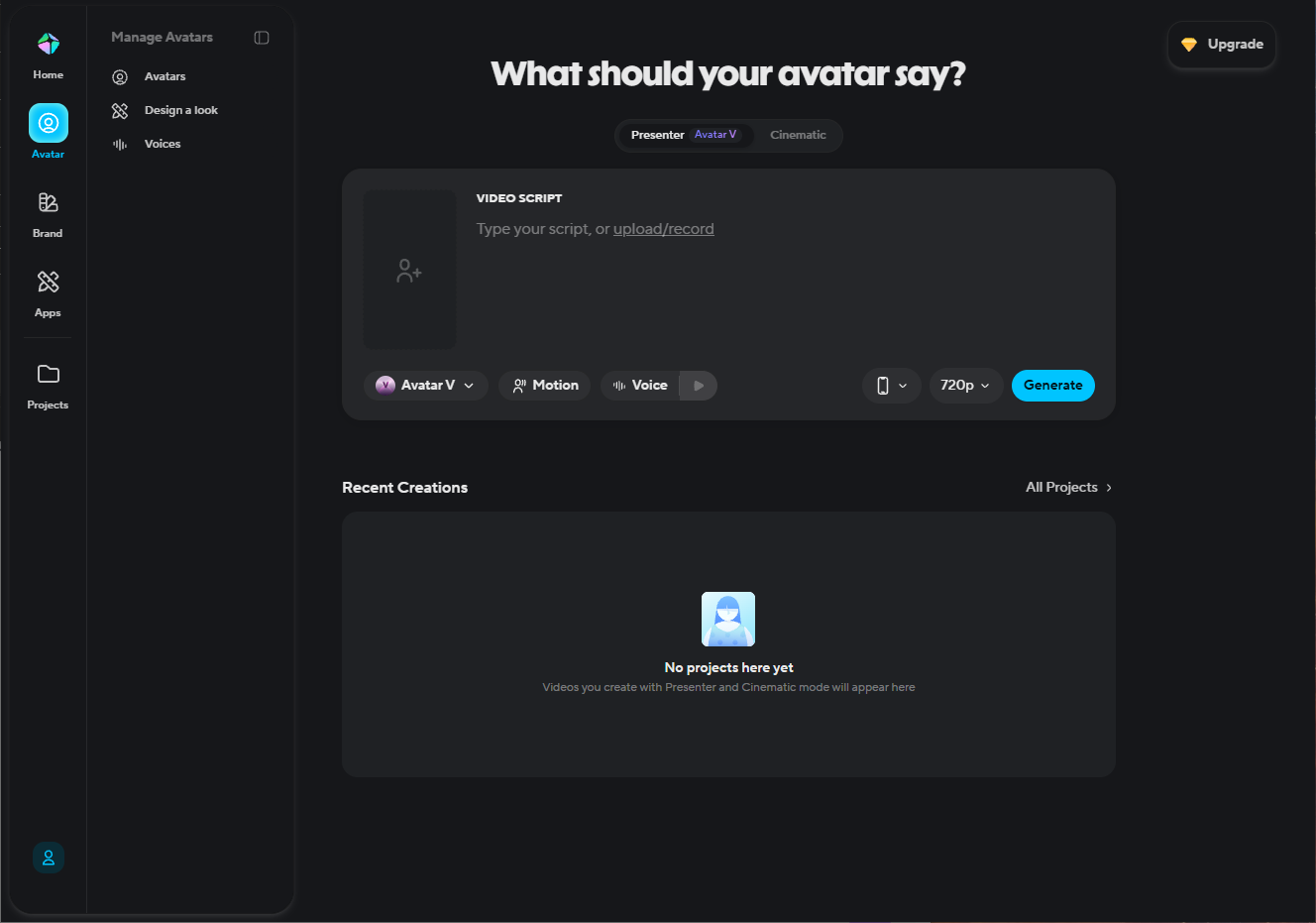
- You gain: the most credible avatar realism here, and translation into other languages without rebuilding the scene
- Cost: SCORM exits the entry tiers and reappears at $149/mo; past a few hundred minutes a month the per-minute premium returns. One r/texttovideo user put it plainly — "pricing does scale fast"
- Migration: low. Scripts, scenes and captions survive the move
- Don't choose it if: your course has to land inside a learning path
Pixmax: For When the Presenter Is the Wrong Format
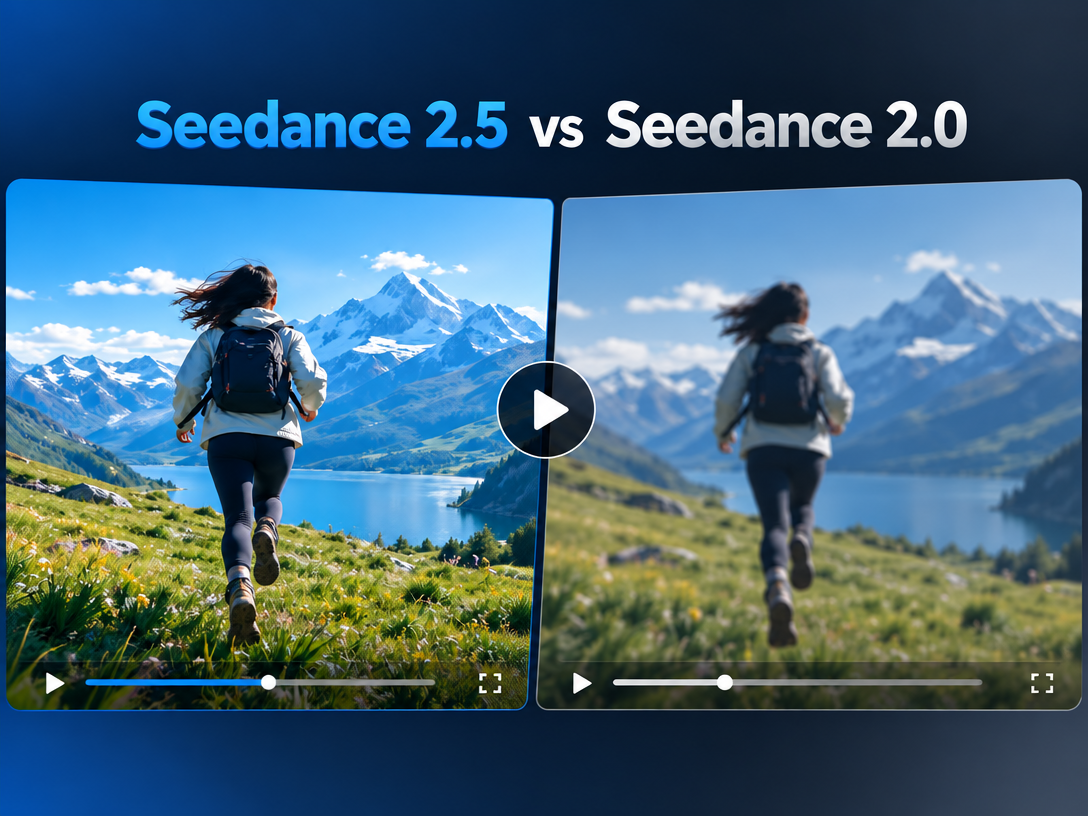
Pixmax is an all-in-one AI production workspace rather than an avatar tool: one platform holds video, image, audio, 3D and text models — Seedance, Kling, Veo, Wan and Hailuo alongside image and voice models — so teams stop juggling separate subscriptions per model.
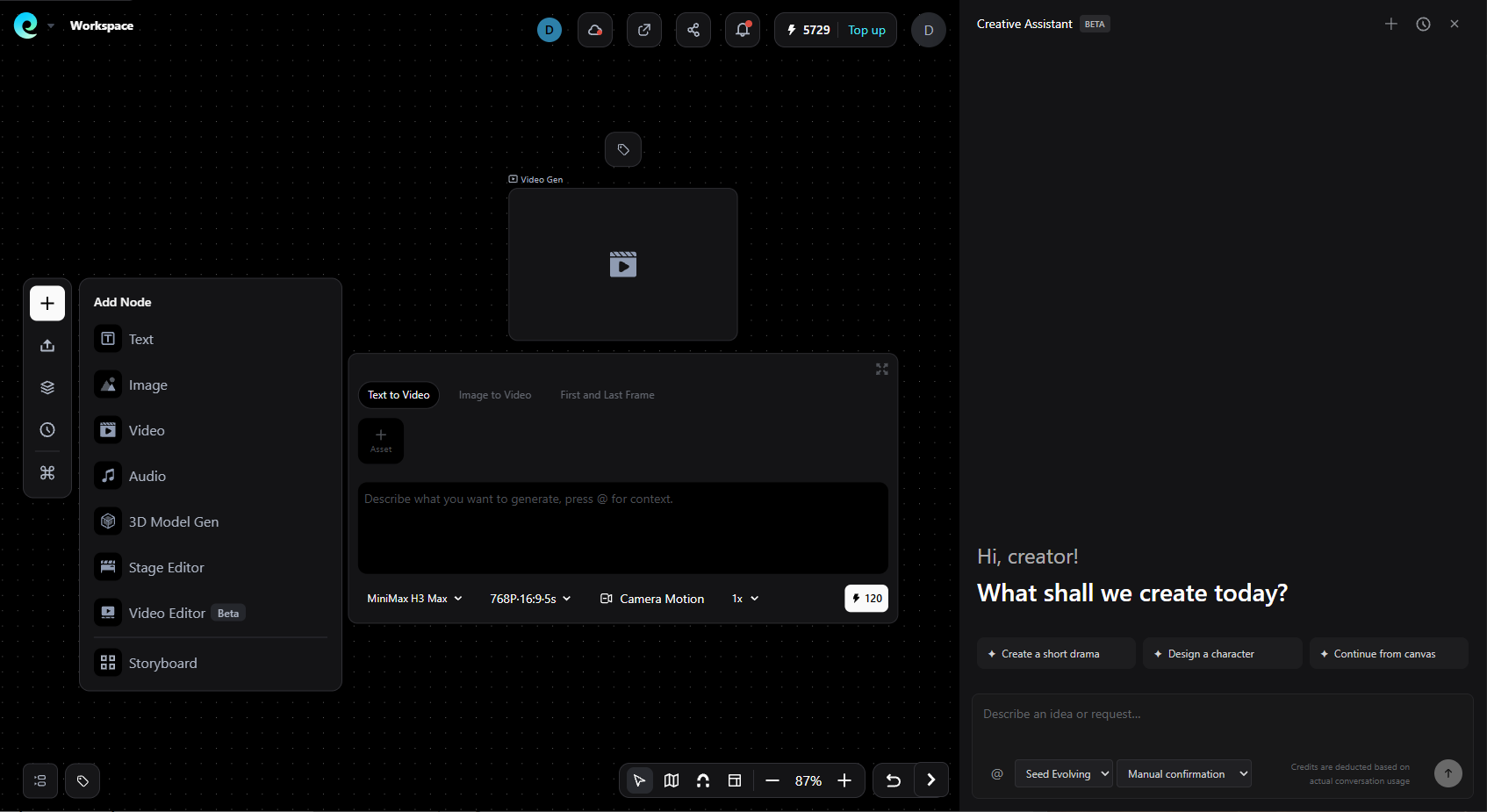
Its AI Video Agent turns a script or idea into characters, scenes, storyboards and clips, with every step left editable. The output is shots, not a person standing in front of a slide, which makes it the fit when your deliverable is ad creative, product visuals or cinematic b-roll rather than a training module.
- You gain: one script can produce cinematic b-roll, product visuals, vertical ad cuts and \digital-human presenter ads\ from a single model hub, and the AI Video Agent keeps revisions as prompt edits rather than full re-renders
- You gain: credits never expire and pool across every model. That is the structural fix for Synthesia's minute cap, and it is a different billing unit — you pay for generation volume, not minutes
- Cost: no verified SCORM export, no SSO, no 140+ language lip-synced avatar pipeline. Regulated multilingual training is not what this is built for
- Migration: medium. Finished avatar videos need rebuilding, but characters, scenes and brand styles in the asset library carry over
- Don't choose it if: compliance is the gate, not creativity
Colossyan: The Synthesia Alternative for LMS-Delivered Training
Colossyan is an AI video platform built for learning and enablement, not general corporate narration. Alongside avatar video it ships branching scenarios, mid-video quizzes, learning paths and a course-authoring environment, plus SCORM export and connectors to Workday, SAP SuccessFactors and Cornerstone. If your video has to become a course rather than a file, that layer is the entire reason to pick it.

- You gain: interactivity and course structure that avatar-first tools push into enterprise contracts
- Cost: 100+ languages (vendor-stated) against Synthesia's 140+ Enterprise figure. If language count is your primary metric, this is a downgrade
- Migration: low-to-medium. Scripts reuse; course structure rebuilds
- Don't choose it if: the pitch is cost
Vyond: The Synthesia Alternative Without a Photoreal Face
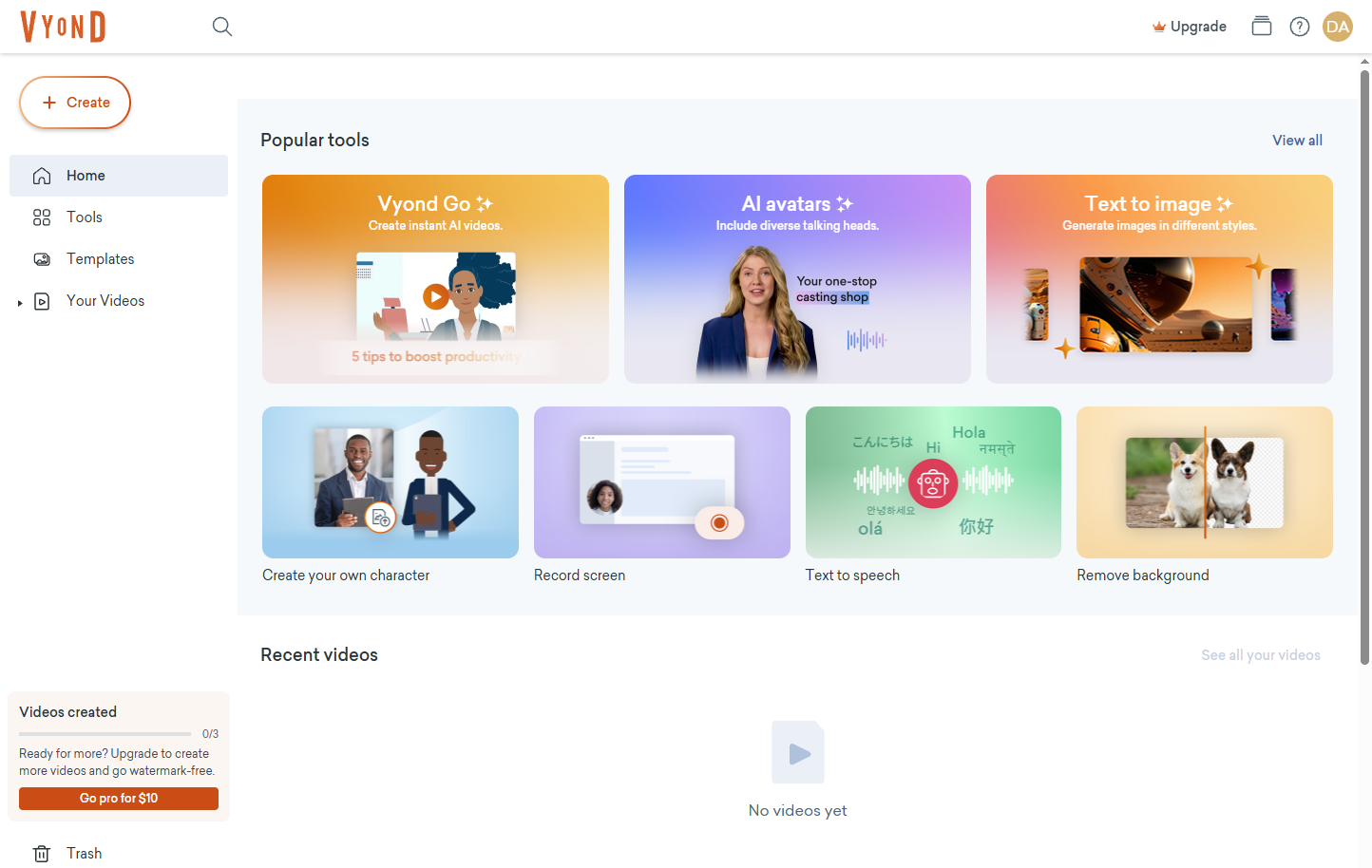
Vyond is an animated character video studio, not an avatar generator. You build scenes with animated business characters, props and motion, which removes the uncanny-valley problem entirely rather than trying to solve it. It also retains SCORM export, making it the only option here that gives you both animation and LMS delivery.
- You gain: stylised characters that stay consistent across a library, plus SCORM
- Cost: it is a manual studio — drag-and-drop, steep learning curve, entry price above avatar tools
- Migration: high. You move from writing scripts to building scenes
- Don't choose it if: you publish weekly in volume
Vidnoz and D-ID: The Cheapest Way to Test, Not to Commit
These two form the budget avatar tier. Vidnoz pairs a very large stock avatar library with a free daily allowance, and D-ID specializes in animating a single still photo into a speaking presenter, which is also the basis of its conversational agent and API products. Neither changes the Synthesia workflow — that is exactly why they are the cheapest way to find out whether avatar video is your format at all.
- You gain: lowest entry price in the group, plus a free allowance worth spending before you pay
- Cost: realism swings more across very large libraries. The cheap option asks you to draw until you get a usable avatar
- Migration: lowest. Near zero
- Don't choose it if: a specific person must appear on camera. Test that one avatar free before deciding
Pictory and Fliki: Free Yourself From the Presenter Premise
These tools abandon the presenter entirely. They convert a script, article, webinar or blog post into narrated stock-footage video, with Fliki leading on its voice library and Pictory on long-form summarising. That is the fastest path for content teams with a writing backlog and no need for an accountable on-camera voice.
- You gain: the shortest distance from text you already have to a finished video
- Cost: training use cases largely break. Without a presenter there is no accountable voice explaining
- Migration: low. Input formats are more forgiving
- Don't choose it if: someone has to own the explanation
How to Switch Without Losing a Quarter
- Write the constraint in one line. Cost, format, or workflow. Undefined switching is how teams end up paying for three tools.
- Compute your real monthly unit cost. At volume, r/generativeAI users note that every premium SaaS here carries a steep per-minute premium. Know your output minutes before signing.
- Re-render one real video, not a demo. Production footage, real language, real revision count. Trials hide credit burn.
- Migrate in stages. Keep one platform live while the second proves output quality. The same credit-economics problem shows up on the design side too — see our \Envato AI alternative breakdown\.
FAQs
What Is the Best Synthesia Alternative in 2026?
HeyGen for avatar video, Colossyan for LMS training, Pixmax for cinematic and ad creative beyond talking heads.
Which Synthesia Alternative Works Without Avatars?
Vyond for animation, Pictory and Fliki for stock-footage video, Pixmax for b-roll and product creative. Descript and Veed edit real footage instead of generating it.
Why Do People Leave Synthesia?
A shared credit pool that revisions consume, minutes that don't roll over, and a talking-head-only output format.
Is There a Free Synthesia Alternative?
Yes. Synthesia's free tier gives 1,200 credits monthly, Vidnoz offers a daily allowance, and Pixmax has a card-free trial.
How Long Does Switching From Synthesia Take?
Low for Vidnoz, D-ID, HeyGen and Pictory. Medium for Pixmax and Colossyan. High for Vyond, because you change how you make video, not just which tool you use.
Conclusion
The right Synthesia alternative fixes the specific layer that broke, not the one with the longest feature list. Diagnose the failure, rule yourself out if the deliverable is a course package, then match the tool to the layer. Thanks for reading.